
Wind turbines sell themselves as clean and green. No smoke. No waste. Just free wind turned into free energy—or so the pitch goes. But out in the real world, wind turbines are as mechanical as any other machine, and they come with problems that nobody’s advertising: carbon fiber shedding and oil leaks.
For farmers on the Palouse—land where soil quality is king—these problems are more than just technical details. They’re a quiet but serious threat to crops, livestock, and the health of the land itself.
The Carbon Fiber Problem
Modern turbine blades are massive—each one can be over 200 feet long. They’re built from carbon fiber composites, which are lightweight, strong, and durable. But they’re not indestructible.
As blades spin—sometimes for hundreds of millions of cycles—they encounter wind, rain, hail, dust, and temperature extremes. Over time, this wears the blades down, causing microcracks and the gradual shedding of carbon fiber particles.
These particles don’t just blow harmlessly into the air:
- They settle into the soil, where they can remain for decades. Carbon fiber is not biodegradable; it breaks down into smaller pieces but never truly disappears.
- In agricultural regions, these microscopic shards can mix into fields where crops grow and animals graze.
What does this mean for farmers? It’s a question nobody’s answering yet. Researchers are only beginning to study how carbon fiber particles interact with soil and crops, but early indications are troubling. These particles can alter soil chemistry, reduce water retention, and—worst of all—could be absorbed into the food chain.
Once those fibers are in the ground, they aren’t coming out.
Leaking Oil into Farmland
Turbines might look sleek and high-tech, but their inner workings are far from pristine. Each turbine contains a gearbox that holds hundreds of gallons of lubricating oil.
Like any other machine, turbines leak. They’re exposed to the elements, operate under immense strain, and require regular maintenance to avoid breakdowns. But even in perfect conditions, oil leaks happen—dripping down towers, pooling at the base, and soaking into the ground.
One study found that large wind farms can lose hundreds of gallons of oil annually across multiple turbines. On agricultural land, that oil doesn’t just disappear. It contaminates topsoil, spreads through rain runoff, and can compromise the very thing farmers rely on: clean, healthy soil.
- Oil can reduce soil fertility, choking the ability of crops to absorb nutrients.
- Leaked fluids may contain heavy metals and toxic additives that persist in the environment.
- For livestock farmers, there’s a risk of grazing animals ingesting contaminated plants or water.
Wind energy companies will tell you the risk is small. But small, repeated contamination across dozens of turbines adds up. And unlike a visible spill on a roadway, these leaks are gradual and hidden. By the time anyone notices, the damage is done.
Who Pays the Price?
Harvest Hills and companies like it will promise landowners steady payments and low impact. What they won’t tell you is that the real cost might not show up for years—hidden in declining yields, contaminated soils, and unseen pollution that quietly compromises your land.
For farmers who pride themselves on their stewardship of the Palouse, this should raise red flags. Wind energy companies won’t be here to clean up the mess when the blades start shedding and the oil starts leaking. Harvest Hills plans on packing up and selling their portion of the Palouse to the highest bidder. They won’t pay for damaged soil or lost productivity.
That burden will fall on landowners.
What’s the Solution?
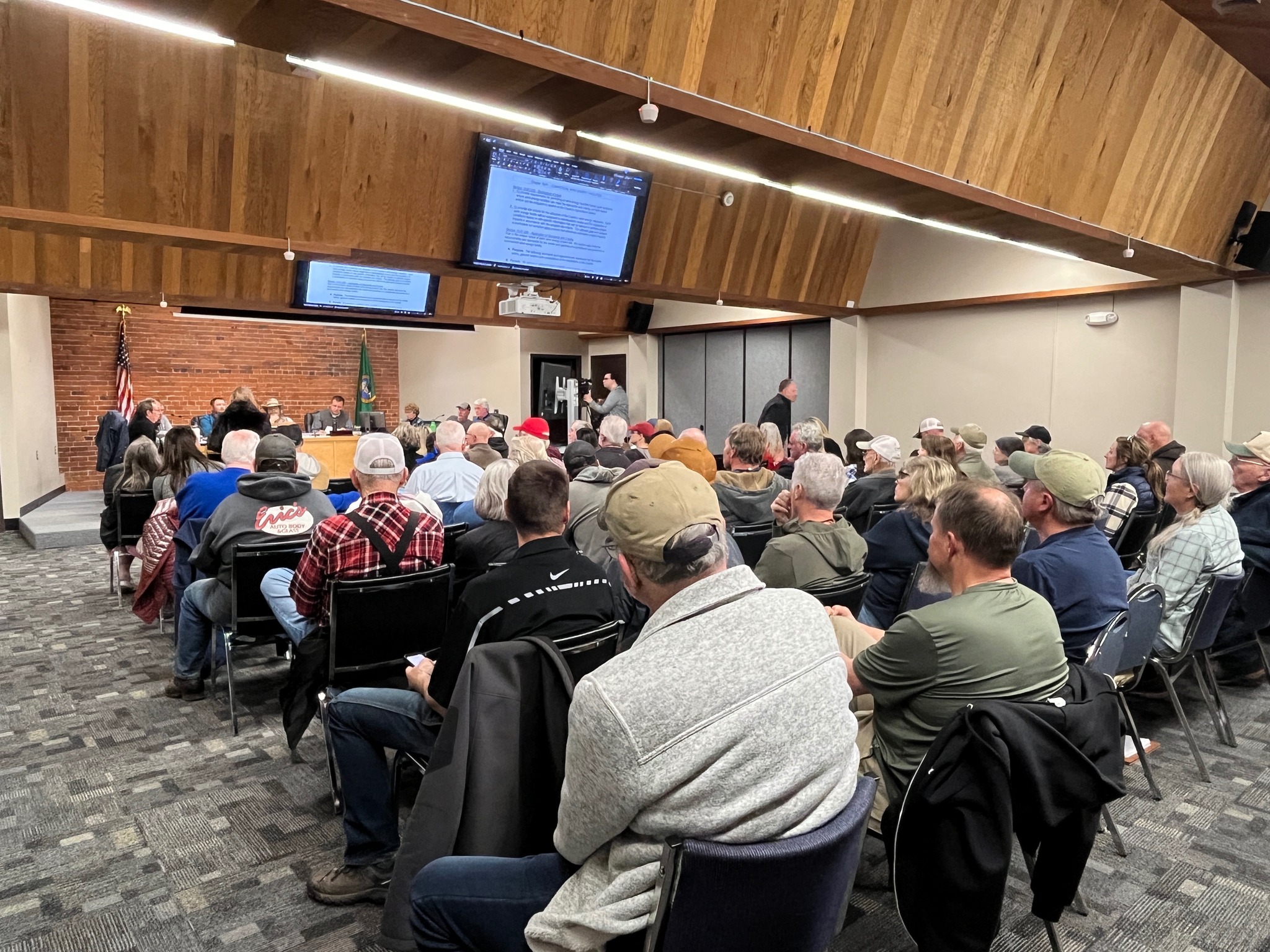
The commissioners and landowners signing off on this project owe the public answers:
- Where are the studies on carbon fiber shedding and its impact on farmland?
- What protections are in place to monitor, prevent, and remediate oil leaks?
- Will landowners be left holding the bill for long-term contamination?
Wind energy may be sold as the future, but that doesn’t mean its impacts should be ignored in the present. The Palouse isn’t just any landscape. Its beauty and productivity are irreplaceable. The cost of ignoring these risks will be written in the soil itself—long after the turbines stop turning.
We also have to look at how it affects the human body that live close to these wind turbines.